Monday, 27 August 2012

A Message from Dan...

 
Not very long now before I head off- here's a little message for you!


Wednesday, 22 August 2012

The Best of Norfolk- PART FOUR

Dan leaves the country in less than a week, to go to America on a Gap Scholarship he received from the Royal Geographical Society. In this, his latest four-part series, he celebrates the aspects of Norfolk he will most certainly miss. To conclude the series, in this programme, Dan takes a look at some of his Norfolk memories and visits the places that made them.

Friday, 17 August 2012

A LEVEL RESULTS DAY- Dan's reaction

I would like to say a big "congratulations" to all those who received results from their A Level Examinations yesterday, and a further "well done" to those who managed to secure a place at their chosen university. I, for one, am celebrating the opportunity I will have to read Physical Geography at the Royal Holloway, in Surrey. It is, arguably, the best university, I think, for this particular strand of Geographical Higher Education and I am looking forward to working amongst fellow keen geographers like myself!

From what I understand from a report released from the Royal Geographical Society, Geography seems to be getting more popular; great news for people like me who are continually promoting the subject. There was an increase in the number of students sitting Geography A levels this year; 32,005 students across England, Northern Ireland and Wales took their A2 exams this year and 45,923 sat AS Exams. Collectively, that is 3.9% higher than 2011.

One of the things that was going through my mind yesterday was whether academic excellence and high level attainment are any substitute for subject passion. Are they compactible? Does one naturally get top results if they are 100% passionate about the subject?

Not for me, and maybe not for you either. I have 200+% passion for Geography; the subject and the way it is delivered. I put in hundreds of extra hours into it; well, 'Geography with Dan' is just one example. But, I certainly don't receive the highest results all the time. Flip the coin, and let's consider someone who actually does get the top grades. Not just in a few exams, but in every exam. This person will most likely to have read the textbook inside and out, learning it by rote, so that no question can stumble him or her on the exam day. Does he have time to explore around the subject? Does he find time just to sit there, sipping on a latte, cruising through undergraduate papers and professional journals? Probably not.

So what's my point here? Well, academic excellence is to be encouraged, without a shadow of a doubt. But a strict, military-like approach to learning the information for the exam, I don't think, is always the way to go. We want and, more importantly, need people to think outside the box. The world requires those who can think just as broad as they do deep, and not those who knows what colour the sub-heading is on page 34 of their textbook.

In short, to those going to study at universities in September, high grades are most certainly significant but shouldn't be a substitute for passion. Explore the subject. Ask questions. Debate answers. Have passion.

My very best wishes to all those going to a university of their choice, particularly those who are going on to further explore the wonderful world of Geography.

Wednesday, 15 August 2012

The Best of Norfolk- PART THREE

Dan leaves the country in less than a month, to go to America on a Gap Scholarship he received from the Royal Geographical Society. In this, his latest four-part series, he celebrates the aspects of Norfolk he will most certainly miss. In Part Three, he selects three things that he will be sad to part with. Next week, in Part 4, he selects photos from his childhood and revisits the sites where they were taken.

Monday, 13 August 2012

Three weeks to go!! AND COUNTING...

There's a great sense of anticipation at the moment in the Evans household! It's now just over two weeks before I get dropped off at Heathrow Airport, and start my 5 month Royal Geographical Society Scholarship. Yes, five months- split into what I am calling the 'Three Phases'. By this, I mean 3 months in Alaska, 2 months travelling down the West Coast of the USA, and 1 week in Toronto, Canada! Why so little time in Canada? Well, it's not that I dislike the Canadians; in fact, I originally planned to spend at least a month there. Since my original plans were made, (some time ago now), money has been spent, cuts to the plans have been made, and ultimately, savings too!

A lot of money! I am writing ahead of what will be, no doubt, the biggest and greatest experience of my life. Having said that, trips cost and due to the fact that some of the areas I am visiting are classed as 'Cold Environments', the equipment we have had to get are built for purpose, or in other words, specialist. Knowing the extent of the expenditure, would I go back in time and change things? Cut a few months out? Stay in Europe?

Of course not! The 5 months, as they are currently set out, are all very important. In Alaska, I will be living in a Cold Environment and as a keen geographer, I am looking forward to comparing the primitive lifestyles of the typical Alaskan community against the capital intensive, sophisticated lifestyes of a Seattle resident. Indeed, how does Seattle compare with Los Angeles? (If you're a bit rusty on your maps, Seattle is about 1140 miles North of Los Angeles!) My first impressions of Toronto will perhaps be my only impressions in this trip, because of the short length of stay I have there. However, I do hope to make some observations and assess these against the other two 'phases'.

So, in three weeks time, expect BIG changes to 'Geography with Dan'. I know many will not get the opportunity to do a trip of this nature at my age, so I do hope my blog will be a virtual guide around some of the Americas. Expect daily reports! Expect photos! Expect a weekly video diary! Oh, and I think I might add a weekly quiz question in there for good measure! So, add 'Geography with Dan' to your favourites. Tell your friends! Even if you're not a keen geographer, I do hope that my experience will inspire you to explore more of this wonderful planet!

Thursday, 9 August 2012

A different kind of Olympics

I had a 3 hour trip earlier this week, to West Sussex for a filming shoot and, as often is the case, I killed the time by reading some of my National Geographic Magazines. It felt fitting to browse my 500+ magazines for articles on past Olympic Games. The October 1964 article offered information regarding the 'modern games' and the July 1996 article celebrated 100 years of the modern Olympic sports. May 2008 focused on the Beijing Olympics whilst the August 2000 issue provided a glimpse at the Sydney Games.
The May 1984 issue, however, I brought with me by accident. It did not contain an article which reviewed past, present or future games, nor did it offer any sport-related article. My database was right in selecting this magazine to go with me on my travels, as I soon realised when I started searching the journal. It featured an article on The Olympic Peninsula.
Excited about the prospect of having a break from sport related reading, I continued to explore the article. I must say although I will be about 40 miles East of the National Park later this year (when I   enter Seattle) I have to admit my lack of knowledge for this landmass. From reading the 80s article, I got the first impression that despite it being geographically close to a highly developed and sophisticated culture,  the Olympic Peninsula is strictly in-keeping with its old cultural traditions. It's inhabitants follow nature's calendar, living to the rhythms of flora and fauna, as if animal-like themselves.
Geologically, the World Heritage Site was born as part of an offshore oceanic ridge, "swivelled to its present position during a massive tectonic shift". There's no doubt about its tectonic dynamics; it's "jagged peaks" that form Mount Olympus demonstrate the power of Physical Geography, and the inability of human control. The glaciers carve channels and cut off the migrationary path of snakes, bears, and wolves; all of which are common in parts of Alaska and Canada. (Don't remind me!)
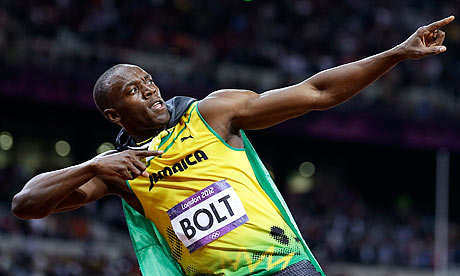
It was through reading this article that I realised there were a lot of interconnections between the sport related Olympics and the National Park; it's not a coincidence that the park is named the 'Olympic' Peninsula. The Olympic Peninsula contains the "pounding surf of Pacific beaches to lush rainforests" for which there is "profound respect for nature's reign". Only this last week, billions have looked up and respected the reign of Bolt in the 100m Sprint, Murray in the Tennis, Hoy in the Cycling. The public, as ever, are proud to be part of their own country and respect the sports-men and sports-women who make life long sacrifices to win gold, just as the small communities of the Olympic Peninsula respect and are proud to be part of such an untouched wilderness.

We're only halfway through the 2012 Games, and already it is clear from watching the TV coverage and scanning the newspapers, that the younger generation are becoming more and more inspired by the efforts of the athletes, the swimmers, the rowers, the jumpers; the sportspeople. They will fuel themselves with motivation and determination by watching this older generation aspire for excellence, much like how the moss and the saplings feed off the nourishment from centuries old wind toppled trees in the Olympic Peninsula.
In all aspects of life, we can make interconnections between the physical and human environment; it's what Geography is all about. The Olympic Peninsula was never named after the Olympic Games, to my knowledge, nor vice versa, but the fact still remains; there are many similarities between the two; the person who can identify this, I think, is a true geographer.

The Games might be classed as the 'Greatest Show on Earth', but I would be hard pressed to make a decision between a seat at the 100m final and a seat on the summit of Mount Olympus.

Wednesday, 8 August 2012

The Best of Norfolk- PART TWO

I leave the country in less than a month, to go to America on a Gap Scholarship I received from the Royal Geographical Society. In this, my latest four-part series, I celebrate the aspects of Norfolk I will most certainly miss. In Part Two, I select three things that I will be sad to part with. Parts 3 and 4 will follow on every Wednesday in this month.

Wednesday, 1 August 2012

THE BEST OF NORFOLK: Part One

Watch Part One of Dan's Brand New Four-Part Series, 'The Best of Norfolk' right here.

With just 30 days to go before Dan leaves the country, he celebrates aspects of Norfolk life that he will most certainly miss. Parts 2 will be released next Wednesday!

Tuesday, 31 July 2012

Dan's NEW four-part series: 'The Best of Norfolk'

It's official! It's about a month now before I go to America for my 5 month Gap Scholarship around Alaska, Western USA and Canada. Despite the fact that I am very excited to be going on what will be a 'trip of a lifetime', I will be sad to leave such a wonderful and varied country, and even more sad to leave Norfolk; the county that has been my home for the last 18 years.

So, every Wednesday in August, join me to celebrate the aspects of Norfolk that I will miss the most. There'll be some obvious choices, and some not so obvious, but all are undoubtedly the things that I associate with Norfolk.

Join me then, tomorrow (Wednesday 1st August 2012), for the start of my latest Four-Part Series, 'The Best of Norfolk'. You can watch by viewing my blog, or my you tube channel 'TV Geog', and if you're a Facebook friend, then check my wall out tomorrow as well.

Friday, 27 July 2012

Geography with Dan: An 'Olympic Special' Feature

Today is a historic day for Great Britain, as the most popular international sporting event officially begins. The 2012 Olympics is finally here after years of planning, building and organisation and I must say I'm getting pretty excited about it all. Billions of pounds have been spent to make sure the next two weeks go off without a hitch, making it a safe and secure games, whilst ensuring it can be enjoyed and accessed by everyone.

It's not just a fantastic time for promoting Sport and Fitness, but I think, a brilliant moment to reflect on how important the Olympics are for Geography. Millions of people around the planet have travelled thousands of miles to join those living in the UK in order to share a sporting event that will leave a legacy not just for the athletes, but for everyone who has been a part of it.

The Olympic Torch Relay has put the 'United' into 'United Kingdom', because eventhough the games are concentrated in London, the relay has travelled across the country ensuring those in the highest and the remotest parts of this wonderful group of islands, are able to be part of it.

Now the day of the opening ceremony has arrived, seven years after the bid was won, the Olympic Symbol will most probably mean something different to the 7 billion people on the planet. For the athletes, it will mean a life long journey of hard work, commitment and dedication to their chosen sport. For those watching on TV sets all around the world, it will mean an opportunity to be inspired to get out and take part in a sport themselves.


For me, it means so many things, but I think the symbol in some ways represents what Geography is all about. A range of different cultures, traditions, peoples and communities from all around the world demonstrating unity and togetherness; 7 billion sharing and being part of Earth's biggest international event; a time to put conflicts and political arguments aside and enjoy what will be one year to remember.

So, when you're next watching the games either on the TV or, if you've been lucky to get a seat in the venue, take a moment to pause and reflect on the 'Geography of the Olympics'. And hopefully it will inspire you, not just to take up and continue a sport of your own, but to consider just how important Geography is in all our lives.

Sunday, 22 July 2012

Virtually follow me...All Around America!

Well, not long now until I venture off to America. Remember you can read all about my experiences daily on this blog, and here's a little preview to my weekly video updates!


Friday, 20 July 2012

Geography is everywhere! And here's how!

It's the Summer Holidays; it must be, as the other day, I found that I was walking aimlessly around the local library. I don't usually have time for such things, unfortunately, but I must admit throughout my aimless 'browsing', I stumbled on a whole section of Geography books I hadn't previously seen. Not my fault either, as the label above the stand read "History"! Well, if you're a budding geography reader and like just picking a spine or two, then investigate other sections of the library. You never know, there could be hydrology in 'Crafts and Arts', geology in 'Poetry' and climatology in 'Psychology'.

It got me thinking though. Despite the fact that there is a clear section devoted to Geography, every subject has got, in varying degrees, an embellishment of Geography in them. I decided to prove this, so I went to random aisles and picked up three random books.

The first was a short little book by John H Arnold, called History: A Very Special Introduction. I didn't read all of it, but just a few pages; just enough to be satisfied that History had some connection and relevance to Geography. Indeed, it seems to! Arnold describes History to "begin and end with questions" and classifies the subject therefore as "a process". Well, Geography is very similar. Geographers come up with processes (like longshore drift, stoping, and isostatic adjustment) by asking questions: how, when, where and why? When their theories are accepted, peer geographers continue to delve deeper into the subject asking further questions: "so why does this happen here and not there?" or "is it sustainable?" Geography therefore could likewise be called a process, as Arnold believes History to be.

The next book I randomly selected was a  Philip Swindells work called Formal Ponds and Water Gardens. I was very pleased to stumble across some geographical references in his Introduction. Did you know that water gardens have had a very long and fascinating history? They developed "out of the need to bring irrigation to crops" in the "Middle and Far East" in "warm or mild climates". In other words, they developed originally to combat the particularly difficult climate that the Middle and Far East is well known for; climatology is a branch underneath the hierarchy that is Geography.

I decided to finish this rather unscientific study of the literary interconnections between Geography and the rest of the world with a look at Fiction. By no means a classic, but the book I randomly selected was Saki's A Shot in the Dark. In the first chapter, one of the characters buys a couple of paintings; "two views from Durham Cathedral". I had only been filming at Durham's Cathedral last week, so I instantly made the geographical link. Durham Cathedral was built around an incised meander, on a hill which, back in the day, provided good views of invasions in the surrounding area, and the river provided defence. It's not surprising therefore that the paintings came from Durham Cathedral and no surprise that one of the characters in the text bought two of them.

So, my little experiment has proven to some extent that Geography is literally everywhere; read between the lines in nearly any book, and you'll find some sort of Geographical references. It passed the time for me, anyway! Try it yourself!

Tuesday, 17 July 2012

44 DAYS TO GO...FOLLOW ME EVERYWHERE I GO...

So, you've probably been wondering what had happened to me these last few months! Indeed, 'Geography with Dan' hasn't been updated for quite a while, but prepare...


Soon, in 44 days time in fact, I will be starting my Gap Year Scholarship to America. Travelling through Alaska, the Western Strip of USA and Canada, I will be investigating the melting of Permafrost, and also sight-seeing in some of the most famous cities of the world.

At present, I am really busy in getting things ready for this trip. I've purchased the boots already- they're great- and I'm currently typing on my brand spanking new laptop, which I shall be taking to the states with me to update this blog, (more on that in a sec!) I am yet to buy a camera and, probably most significantly, a pair of gloves and a jolly good ol' hat!

What's probably most exciting of all is the fact that throughout the 5 months, I will be updating this blog every night. So what can you expect from Geography With Dan from the 30th August 2012?

  • DAY TO DAY LIVE UPDATES OF MY LOCATION AND ACTIVITIES
  • INSPIRATIONAL PHOTOS AND COMMENTS
  • A WEEKLY VIDEO DIARY
You can literally follow me everywhere I go. And please do email on daniel.evans994@yahoo.co.uk .
Finally, why not make it easier to get to Geography with Dan? Make it one of your favourites!

Wednesday, 2 May 2012

We'll wear the weather, whatever the weather...


For those who are surprised about the weather the UK has experienced in the last few months, it seems a percentage of the population have forgotten their first school Geography lesson. The UK has a temperate climate.

It is part of this planet's make-up that makes us decide what to wear in the mornings. Yesterday, Norfolk experienced a period of high pressure; I dressed accordingly with a thin top and shirt. It was so hot that I even managed to slip in a sunbathing session in at lunch. Today, as I write this, my bus is dodging the pond-like puddles, formed from a night of constant wet weather. I am back to woollen jumpers and jeans!

The UK is situated in a temperate climate zone and should experience a wide range of weather. It is due to this meteorological diversity that we get such a vast array of wildlife. If anything, we should feel lucky to experience the odd shower or two.

But I do, in some ways, understand the anxiety. Predicting the long term weather in the UK is becoming difficult what with 'erratic' weather patterns. I've always agreed with the notion that the seasons in a temperate climate are constantly shifting. Maybe the rain that the country is experiencing currently will turn into an annual event. How long will it be before sunglasses and ice creams are sold in November, and umbrellas and gloves are the ‘norm’ for July?

Tuesday, 20 March 2012

A World Without Water- Film and Talk on 19th March

I went to see a rather interesting film at Cinema City last night; 'A world without water' which, as you can imagine, centered around the idea of water scarity. It featured powerful video of families who cannot access this natural resource; a commodity that many of us take for granted. After the film, four members of the UEA discussed with the audience some of the issues raised in the film, and it was interesting to hear views regarding the politics of water. I'm not sure if Cinema City are showing it again, but I do reckon that some parts of it are available online.

Thursday, 15 March 2012

'Around the World in 30 minutes'- a successful trip!

Today, I launched the first of many talks that I will be doing around the county in the next few months, at Paston College, during lunchtime. I called it 'Around the World in 30 minutes' because that was what I was effectively doing. Each and every one of the estimated 90 that were in attendance, all went on a journey with me, that started in space; aided by the great music by Strauss' 'Thus Spoke Zarathrustra'.
The talk went onto how Geography affects all of our lives, and how it has inspired me from such an early age. I concluded with a short summary of how I recieved a scholarship from the Royal Geographical Society to go to America for 6 months, and the many sponsorship activities that I will be doing throughout the next few months.

My many thanks to all who went; it was great to see you! Also, I would like to take this opportunity to say a really big thankyou to all who helped me promote and plan the event. You can see a list of my upcoming talks on the left hand panel!

Sunday, 26 February 2012

GeoPod

Daniel is live at 8:00pm tonight- Click here to listen!


It is a show for everyone- not just geographers and has lots of great music! Plus, why not try his 'Country Conundrum' or take part in his 'Quest for the Best'.

Leave a message if you would like in the box below:

Thursday, 23 February 2012

Dan meets Michael Palin

It feels great to be back in front of the keyboard, typing a blog post once again, as it's been quite some time since I last wrote on here. Not that my life nor this blog's for that matter has been in 'winter hibination'. The last seven weeks- and indeed, I suppose, since the beginning of this year- I have been filming nearly every weekend for the 'Difference with Dan'. I am genuinely overwhelmed at how successful it has become and also how many people who don't study Geography have invested time into it. If my statistics are correct, I have had viewings from outside the UK and thankyou very much to you if this is the case. I do appreciate your support and ask you to tell your friends! Geography is about sharing, after all!

I embark on a new project this coming Sunday. I am really looking forward to having my own online radio show, which will be on every Sunday from 8:00pm. If you've seen the trailer, you would know there's something for everyone, so even if you hate Geography, there will be something for you in there. Please do join me on Sunday (click on the link on the right hand column of this blog) and if you can't listen live, don't worry, as the programme will be available to be listened to again; once more, the link to the site is on the right!

This week has been more about meeting different people and whilst tonight's event with Michael Palin is still fresh in my mind, I will start with him. Michael Palin is without doubt a true geographer; he is so enthusiastic in the subject and I got the immediate impression that he believes travelling and exploration is critical! I agree. The event was held at the Norwich Cathedral 'Hostry'; a wonderful building that blends the historic with the contemporary, that works. A great venue that was definately worth the value of the guest speaker, Mr Palin. His talk was enriched with so many tales about his explorations and has- like all great speakers- made me want to do everything he's done. How great would it be to film around the world in 80 days! After all, it links two of my most favourite pastimes- travel and filming! There is so much I could say about this wonderful man, but of course you could find out for yourself. Michael is on the TV most weeks; more recently on his 'New Europe' series. 

Although less well known, my second visit this week was to someone just as prestigious. Dr Julian Murton, who I met on Tuesday, teaches at University of Sussex and specialises in Permafrost. He is our country's IPA representative (International Permafrost Association) and so meeting him was an honour. I had a really good talk about permafrost and my scholarship, and most certainly hope to see him again one day. His understanding on Permafrost and Periglacial Environments is large but I was most impressed by his appreciation of me being someone from the next generation finding Permafrost interesting.

I have met two very influential people this week, and both have shaped my appreciation for Geography even more. 

Tuesday, 21 February 2012

Bloopers with Dan

Now that series one has finished, here's a chance for you to watch some of the unseen footage of the occasions Daniel got it wrong!

Monday, 13 February 2012

Difference with Dan- Episode 7

In the final episode of the series, join Daniel as he explores the difference between two features of the planet that affect all of our lives.

Monday, 6 February 2012

Difference with Dan- Episode 6

The series continues with Daniel investigating the difference between two very similar geographical terms. This week, join him on one of his favourite walks, at a giant globe, and in a popular North Norfolk tourist attraction.

Monday, 30 January 2012

Difference with Dan- Episode 5

As his series continues, join Daniel once again as he explores the differences between two more geographical terms used in everyday life, but taken very much for granted.

Monday, 23 January 2012

Difference with Dan- Episode 4

Join Daniel once again on his quest to find out the difference between two very similar geographical words. This week he travels to the most easterly point of the UK, goes on a nightime walk, and visits the seaside. Get your buckets and spades ready for another episode of the 'Difference with Dan'.

Monday, 16 January 2012

The Difference with Dan: Episode 3

This week, join Daniel to discover the difference between two very similar landforms that have shaped our lives.


Monday, 9 January 2012

Episode Two of 'The Difference with Dan'

In this, the second episode of the current series, Daniel goes on a journey to explore the differences between two very similar processes that have shaped our planet.

Saturday, 7 January 2012

Happy Birthday Emma

'Geography with Dan' celebrated the 18th Birthday of Meg last year, so it's only fair that I do the same for Emma. (If you're wondering who I'm going on about, these are two of my fellow Paston geographers!)

Finding a place called Emma wasn't difficult at all. In fact I had a choice of two but have decided to go with the following, simply because of the wealth of information about it.

Emma, in Missouri, is a city in the Lafayette and Saline counties. It's 2000 census recorded a population of 243, so not a megacity then! However, it does have some interesting characteristics about it. Back in 1888, funnily enough the year of the first National Geographic Edition, a post office was established and was called 'Emma'. Questions were raised as to why the building was named this, but the answer was always that they were instructed to select a short name. They weren't allowed to add a 'burg' or a 'ville' to the name. Emma met up to requirements and therefore, Emma it became.


The city since then has prospered with growth in the service industry. Less growth has been seen in its population. Since the 2000 census, the population growth rate has been -9.47%. Having said this, Emma's median house cost is fair, at $112,700 and the cost of living in the city is actually nearly 13% lower than the US average. Whilst living expenditures may be low, the unemployment rate is high, only about 0.5% lower than the US average but still a negative job growth.

Whilst Emma doesn't sound as brilliant as the Emma I have the fortune to sit next to in Geography, at least somewhere in the world is a city that is proud to have that as its name. Happy Birthday Emma!

Tuesday, 3 January 2012

BRAND NEW SERIES: The Difference with Dan

New to the Blog for 2012, Daniel heads out every week identifying the differences between two very similar geographical terms. He starts off this week with a look at the difference between a rock and a stone, travelling to Rhodes, Somerset, Dorset and a Norfolk Church.